
Bubble Freedom
Bubble Shooter ArtworksAdventure
4.49.21K Reviews
- Version
- 6.40
- Installs
- 10.00M
- Age Rating
- Everyone
Screenshots
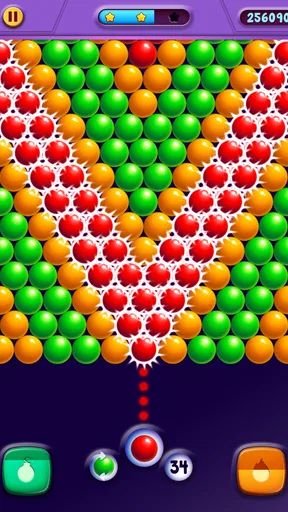
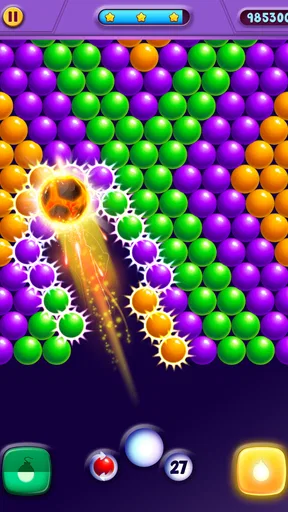
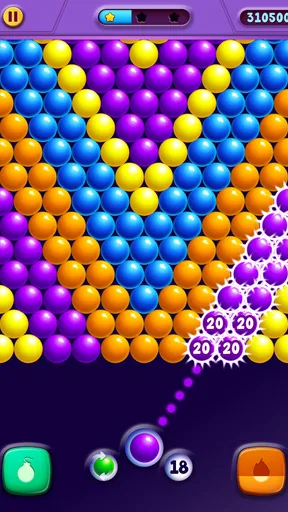
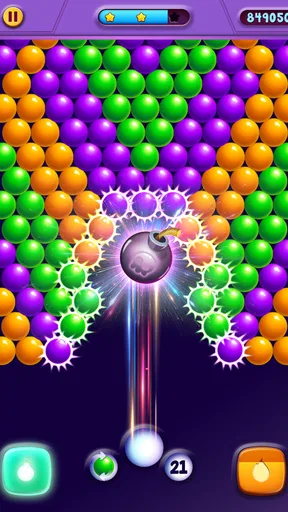
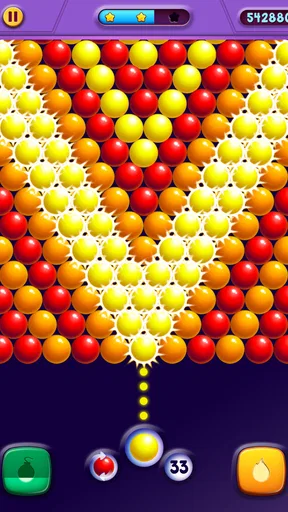

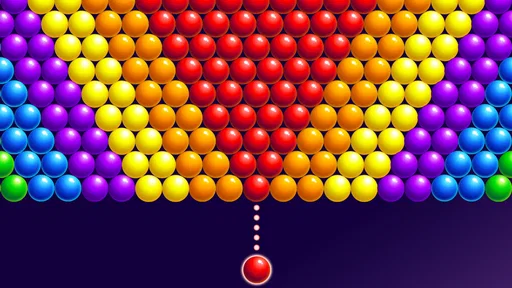
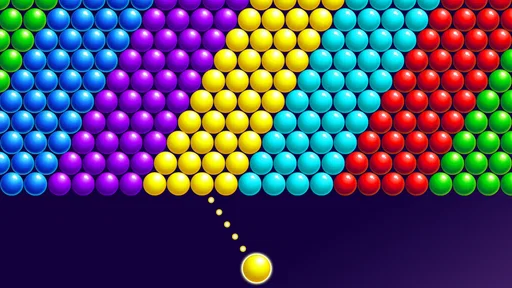
Our Review of Bubble Freedom
 Analysis by Appyee
Bubble Freedom is the kind of adventure puzzle game I can open for a few minutes while waiting for an appointment and still feel that I have made some progress. Its core idea is easy to understand: aim at groups of colored bubbles, match at least three, and clear the board. What makes the experience work is not a complicated story or a large collection of controls, but the steady rhythm of small goals, visible board changes, and occasional power-ups that help turn a difficult layout around.
I reviewed it as a casual player rather than someone looking for a demanding competitive game. That distinction matters. This is a free game from Bubble Shooter Artworks, rated for Everyone, and it is much more interested in quick, approachable sessions than in deep strategy. I found it most enjoyable when I treated each level as a compact problem to solve instead of rushing to fire every shot. The colorful presentation is inviting, but the real question is whether the progression keeps giving me a reason to play one more round.
How Bubble Freedom builds momentum from simple goals
The opening goal is immediately readable: remove bubbles by forming groups of three or more. I did not need a tutorial full of explanations to understand what the game wanted from me. That clarity is one of its strongest qualities. A new player can start making useful decisions almost at once, while a more experienced bubble-shooter player can focus on angles, color order, and how to create a larger chain reaction.
Early levels benefit from this simplicity because they let the player learn through action. I quickly began looking beyond the closest matching group. A shot aimed at a small cluster may clear a few bubbles, but a shot placed against a support group or an awkward side wall can open a much larger section of the board. That is where the game starts to feel more thoughtful than a basic matching exercise.
The most satisfying early objective is often not simply removing the biggest visible group. It is creating a path toward bubbles that are difficult to reach. I found myself checking whether a shot could bounce off a wall, whether clearing one color would drop others, and whether saving a useful color would make the next turn stronger. These decisions are small, but they give the short sessions a pleasant sense of purpose.
Power-ups and boosters add another layer to those goals. They are useful when the normal shot is not enough, particularly when the board has a cramped arrangement or when a needed color is inconveniently placed. I prefer using them as problem-solving tools rather than spending them automatically. A booster that clears a stubborn section can preserve a run, but using one too early may leave me without an answer when the layout becomes more demanding.
That creates a practical tip for new players: before activating a power-up, inspect the whole board and ask what it changes. If it only removes a few easy bubbles, waiting may be smarter. If it opens a blocked route or removes a group that prevents several others from falling, the same tool has much greater value. The game does not need a complex inventory system to make this choice meaningful; the board itself supplies the decision.
For an everyday example, I found the game suitable for a short commute or a break between tasks. I could play a level without needing to remember a long quest chain or follow a detailed narrative. If I had only a little time, the clear objective made it easy to stop after a level. If I had more time, a difficult board naturally encouraged another attempt. That flexibility is more valuable here than a dramatic story would have been.
Progress feels clearest when the board changes visibly
Bubble Freedom communicates progress mainly through the state of the puzzle in front of me. A crowded board becoming open, a suspended group dropping away, or a carefully placed shot clearing an upper section all provide immediate feedback. I never needed a separate explanation to understand that a good move had improved my position.
This visual progress also helps the game avoid feeling completely random. Even when the available bubble color is not ideal, I can usually identify a better and worse choice. The useful question is not always “Can I clear something now?” but “Which move leaves the best board for the next shot?” That shift gives the game more staying power than its three-bubble rule might suggest.
Unlocks and level advancement work best when they support that feeling of moving forward rather than interrupting it. I liked having a reason to continue beyond a single successful board, but the individual level still needed to stand on its own. The strongest moments came when I could see a route through a puzzle and then execute it, not when I was simply repeating an easy pattern for a reward.
One of the less obvious strengths is that a failed attempt can still teach something. I may discover that I spent a useful color too soon, aimed at the most obvious group, or ignored a side route that would have exposed a larger cluster. On the next attempt, the board becomes a planning problem instead of a blind retry. That is especially helpful for players who dislike games where failure feels entirely dependent on luck.
There is still a limit to how much progress information a minimalist puzzle can provide. Players who want a character, a rich world map, or a detailed collection system may find the advancement less emotionally rewarding. The motivation here is primarily mechanical: clear the next arrangement, improve the next decision, and see how far the sequence carries you. I consider that a fair trade, but it means the game is not trying to replace a story-driven adventure.
The app has attracted a broad audience, with an average rating of 4.4 from around 120 thousand ratings and more than 10 million installs. Those figures suggest that its uncomplicated format has reached many casual players, but they do not change my main advice: choose it for accessible bubble-shooting sessions, not for elaborate character progression or a narrative campaign.
Challenge rises through positioning rather than complicated rules
The difficulty curve is most effective when it makes familiar actions less forgiving. At first, matching colors is enough to make progress. Later, I had to care more about the order of shots, the angle of the launch, and which bubbles were supporting larger sections. The rules remain understandable, but the consequences of a careless move become more noticeable.
This is a good approach for a casual adventure game because it does not bury the player under new mechanics. I could keep using the same basic controls while improving my judgment. A player who is comfortable with aiming can concentrate on precision, while someone who prefers relaxed play can still enjoy clearing simpler layouts. The challenge comes from arrangement and timing, not from learning a long list of commands.
Wall bounces are particularly important once direct shots stop being enough. I found that a banked shot can reach a group that appears blocked, but it is also easy to misjudge the angle. The safest approach is to use a bounce when it creates a clear advantage, not merely because it looks clever. A complicated shot that leaves an unhelpful color exposed can be worse than a modest direct match.
Another useful habit is to separate immediate clearing from structural clearing. Immediate clearing removes what is easy to reach. Structural clearing targets the bubbles holding up a larger formation. When I focused on the second kind of move, some boards became much more manageable. This is the sort of insight that will not be obvious from a short store summary, but it makes a real difference during play.
The game can become less comfortable for players who expect every turn to produce a strong result. Sometimes the best move is defensive: remove a small group, create space, or prepare the next shot. That can feel slow compared with a large cascade. I think the pacing works better when I accept that not every turn is meant to be spectacular. The tension comes from preserving options until the board offers a better opening.
At the same time, players seeking a consistently intense challenge may find the early portion too gentle. Bubble Freedom is designed to be approachable first. It does not begin by demanding expert accuracy, and that makes it suitable for children and relaxed players, but it also means a veteran of the genre may need patience before the more interesting decisions appear.
The Everyone age rating fits the accessible presentation and straightforward objective. I would still describe the game as more suitable for people who enjoy visual planning than for someone who wants action, reflex-heavy stages, or a competitive multiplayer test. Its challenge is quiet and deliberate, even when a late shot decides whether a board survives.
Where the pacing encourages another attempt
The retention pressure in Bubble Freedom is fairly transparent: a nearly cleared board, a missed opportunity, or a promising setup can make me want to try again. I do not need a dramatic story cliffhanger. The unfinished puzzle itself supplies the pull. When I lose after making a series of good moves, I usually understand what I might change, which makes another attempt feel reasonable rather than arbitrary.
Boosters and power-ups strengthen that loop because they offer a way to recover from difficult positions. I appreciate them most when they feel like strategic choices rather than automatic solutions. Saving one for a board with a blocked route can change the outcome, while using it on a comfortable opening may only shorten a level that I could have solved normally.
That convenience also brings the main caution. The game is free to play, but optional in-app purchases range from $0.99 to $99.99 per item. I would recommend deciding early whether I am comfortable playing patiently without buying help. The lower-priced options may be tempting during a frustrating level, while the higher-priced items make it especially important to treat purchases as optional entertainment spending, not as a requirement for enjoying the game.
For my own play style, the best way to avoid pressure is to set a simple rule: attempt the board normally, study the failure, and use a booster only when it solves a specific problem. That keeps the power-up from becoming a reflex. It also preserves the satisfaction of learning the level rather than paying to skip the part that makes the puzzle interesting.
Players may also wonder whether it works for very short sessions. In my experience, yes. The level-based structure makes it easy to play one board and put the phone away. It is less suitable if I want a game that can run in the background or be enjoyed without visual attention, because aiming and reading the bubble layout are central to every move.
Another practical question is whether it is appropriate for a family device. The Everyone rating and simple matching concept make it approachable for a wide age range. However, younger players may need guidance around optional purchases, especially because a difficult board can make a booster feel urgent. The game itself is easy to understand; the spending decision deserves more attention than the controls.
Players deciding between this and a more elaborate bubble-shooter alternative should consider what they value. Bubble Freedom is a better fit when I want direct controls, colorful boards, and progression that stays focused on clearing puzzles. A richer alternative may be preferable if I want a strong story, character upgrades, social competition, or a more complex long-term build. Those features can add depth, but they can also make a quick session feel busier than necessary.
Who will enjoy it, and who should skip it
I recommend Bubble Freedom to casual puzzle fans who like visible objectives and gradual improvement. It is especially well suited to players who enjoy finding angles, planning two or three moves ahead, and watching a crowded board open after one accurate shot. It also works for people who want an adventure-themed game without having to learn a large world or manage many systems.
I would be more cautious recommending it to players who dislike repeated attempts. The basic interaction remains focused on matching bubbles, so anyone bored by that loop will not find a completely different game hidden underneath. Likewise, people who need a strong narrative reason to continue may not connect with the mostly mechanical progression.
It is also not my first choice for someone who wants a purely skill-based experience with no purchase pressure. The free entry is convenient, and the boosters can be useful, but the presence of optional items means I would approach it with a clear spending boundary. For a player who prefers a one-time purchase or a completely stripped-back puzzle, another option may feel more comfortable.
The current version is 6.40, and the game supports devices running Android 5.1 or later. That makes it a practical option for people using an older compatible phone rather than a device built only for demanding modern games. I would still judge the experience by the screen: a larger display makes aiming and inspecting crowded arrangements easier, while a small screen can make precision shots feel less comfortable.
My verdict on the progression and long-term appeal
After spending time with Bubble Freedom, I think its progression succeeds because it builds on three dependable pleasures: an obvious early goal, increasingly meaningful positioning, and the chance to rescue a difficult board with a well-timed tool. The pacing is strongest when the game asks me to improve my choices without changing the rules underneath me. That makes the learning curve friendly, but it still leaves room for careful players to find better solutions.
Its limitations are just as clear. The formula can feel repetitive if I need constant novelty, and its long-term motivation is more about puzzle mastery than about characters or story. The optional purchase range also means I would not recommend playing without a personal limit on spending. Those are not small details, but they do not undermine the central experience when the game is approached as a free, casual bubble puzzle.
The developer, Bubble Shooter Artworks, has kept the appeal focused on quick matching, board reading, and satisfying clears. I found that focus refreshing compared with alternatives that surround a simple puzzle with too many menus or progression layers. On the other hand, players who enjoy those extra systems may see the streamlined design as thin rather than elegant.
My final recommendation is positive, with a specific audience in mind. If you want a free adventure game for short sessions, enjoy planning shots, and like progression that comes from solving one colorful board after another, Bubble Freedom is easy to pick up and rewarding enough to keep nearby. If you need a deep story, constant mechanical variety, or a purchase-free environment, I would look elsewhere. For everyone between those extremes, its straightforward goals and gradually sharper challenge make it a dependable way to turn a few spare minutes into a satisfying puzzle session.
Verdict
Strengths of Bubble Freedom
- Simple bubble-popping gameplay is easy to learn.
- Bright visuals make the game appealing to casual players.
- Short levels fit well into quick gaming sessions.
- Offline play is useful when no internet connection is available.
- Gradually increasing difficulty helps maintain player interest.
Limitations of Bubble Freedom
- Gameplay may become repetitive after extended sessions.
- Some levels can feel unbalanced or unexpectedly difficult.
- Frequent ads may interrupt the overall playing experience.
- Limited customization reduces long-term personalization options.
- Progression may feel slow without optional in-app purchases.
Similar Picks in This Category
View All
Roblox
Roblox Corporation4.2

Pokémon GO
Niantic, Inc.3.5

Ninja warrior: legend of adven
TOH Games4.6

Ninja Arashi
Black Panther4.6

Eyes - The Horror Game
Fearless Games sp. j.4.5

Critical Action:Gun Strike Ops
FPS Shooter & Action Game4.3
Frequently Asked Questions
What is Bubble Freedom and how does the game work?
Bubble Freedom is a casual bubble-shooting puzzle game in which you aim and match bubbles of the same color to clear them from the board. During my review, the basic controls were easy to understand: tap or drag to adjust your aim, then release to shoot. As levels progress, layouts become more challenging and require planning rather than simply firing quickly.
Is Bubble Freedom free to download and play?
Bubble Freedom can generally be downloaded and played without an upfront purchase, making it accessible for casual players. However, free games may include advertising, optional in-app purchases, or both, depending on the version and platform. Before downloading, check the current store listing for pricing details, available purchases, and whether any features or boosters require payment.
Does Bubble Freedom require an internet connection?
The main puzzle experience in Bubble Freedom may be playable without a constant internet connection, which is useful for short sessions while traveling or when mobile data is unavailable. Nevertheless, some functions can depend on connectivity, including advertisements, purchases, updates, synchronization, or promotional events. Availability of offline play may also vary between Android and iOS versions.
Is Bubble Freedom suitable for children and beginners?
Bubble Freedom is designed around simple touch controls and familiar color-matching mechanics, so beginners can usually start playing without a lengthy tutorial. It may also be appropriate for children, but parents should review the age rating, advertising practices, and in-app purchase settings before installation. Difficulty can increase over time, so younger players may occasionally need help with advanced levels.
Are there ads or in-app purchases in Bubble Freedom?
Bubble Freedom may use advertisements and optional purchases as part of its free-to-play model. Ads can appear between levels or when players choose to receive extra rewards, while purchases may provide boosters, additional lives, or other conveniences. The exact offers can change with updates and by region, so review the app-store information and device purchase controls before allowing transactions.
Play our best games!


